I have a confession…
I Have a Confession...
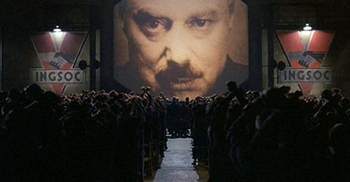
We’ve all had jobs that we like, and some we don’t. Sometimes we get a job we love. I’m lucky enough to have had two jobs that I love. One was a long time ago when I was the State Department advisor to U.S. Special Operations Command (USSOCOM). It was incredibly unique – and cool. Among other things, I traveled around the world with a 4-star General and attended and graduated from U.S. Army Airborne School as a civilian. It’s a great story. Ask me about it over cocktails if you are interested.
More relevant to this blog, the other job I love is my current one as Executive Director of Western Power Trading Forum (WPTF). Representing our member companies, promoting competitive electric markets in the West, and participating in the development of the most essential industry in a modern economy is extremely rewarding to me. As was the case when I worked in national security issues, I enjoy believing in a “cause.” Now, it’s about promoting institutions that facilitate competitive energy markets, and this fits me.
However…
Lately, advocacy on the actions of government action – federal or state – has become more difficult than seems healthy. I fear that we are sliding into an inescapable orbit of government planning. The regulatory process is intended to be independent, but record based decisions are being influenced to achieve the pre-determined “results” of the government planning.
To this problem statement, one might respond: “Well, what is wrong with a government plan and a regulatory process that makes the outcome happen?” The problem is the government “plan” seldom conforms with the needs of the economy, five or ten years out. It also undermines, in imperceptible ways, durable investment decisions if industry is constantly looking over its shoulder to see what the government is demanding.
Others responding to this problem say, “what examples might you cite to demonstrate the problem?” Here, we delve into dangerous waters in which I am loath to swim, as one is not sure how our government or regulators – whether at the state or federal level – will respond. But, here goes.
How it feels
A new Administration comes to power and is opposed to some kinds of electric generation and favors others. Fair enough, that’s what elections are for and those that win get to set the policy table. However, sudden changes in tax policies can have a highly disruptive effect on companies that are ready to deploy the assets necessary to meet rapid demand growth. Advocacy in favor of more gradual changes to allow deployment of assets near completion seems imprudent in the current political environment. It is not welcome. It might get someone into trouble.
I suppose the same could be said about advocacy for rules in the regulatory sphere. I will not suggest any examples, but over the last several years, the prudent approach to regulating seems to have evolved to a more directive, results orientation. Hard as it is to say with specificity, federal regulation appears to increasingly exhibit a desire to fulfill expectations of federal government policy of the moment.
Certainly, there are examples in a state like California where expressing unease with a results oriented approach to regulation is not acceptable. Most recently this came when many of my member companies considered whether to spend significant money to challenge a California Public Service Commission’s (CPUC) decision that did not (in our view) follow the law on a procurement standard. Every law firm we approached told us not to waste our money. There was no chance of successfully challenging the CPUC. It must be bad if law firms are turning down legal fees.
The zeitgeist in California has been decidedly anti-competition for many years. One gets the feeling this is mostly a staff preference for central planning over competition but a point on the general direction of CPUC seems a waste of breath and won’t make the next filing for those who express such a view very welcome.
In both these instances – both in federal and state venues – one is left with a feeling of ennui that due process was being undermined. But what to do?
My “confession” is that I am sometimes unable to express a polite disagreement on matters that I think are reasonable for discussion. Heaven knows what reactions my tepid musings will evoke if read by certain audiences. Discretion on how to express a viewpoint is always to be sought. Self-censorship can, over time, undermine good policy.
The cynics response… so what?
A reasonable response to the lament I have outlined above would be: “So what? The government (state and federal) have been intervening for years with environmental and economic regulations. Congress has been giving incentives for the development of certain technologies through tax policy.” Both are correct but are far different than the heavier handed direction coming out of the recent political epoch. Industries arise and grow under the normal “incentives” based approach.
- This is how we developed the competitive industry that led to efficient combined cycle plants that drove down heat rates.
- It resulted in large, networked based transmission operators that drove efficiencies.
- It led to incentives for drillers to develop and perfect fracturing technologies that made natural gas abundant and cheap.
- It led to dramatic price improvements in solar and battery technologies.
These “incentives” were not predetermined outcomes. They led to investments.
The problem with the “predetermined” or “results oriented” approach is that in an era of divided politics, what is “in today” may be “out tomorrow”. Electric asset development takes time even under the best circumstances. If the political wind changes and massive amounts of capital are in the process of being deployed for the last political directive, how will providers of capital react to a large demand to be deployed elsewhere? How will such an environment affect the cost of credit?
The time for worry about this may be upon us. Certainly, there is a need for a significant build out of generation and transmission. Should the specific generation be directed from governmental or regulatory fiat? Or should the government provide incentives for some actions but not prohibitions on other deployments? Should the regulatory process determine if rules are being followed and encourage improvements to processes for interconnection? Could governmental action help the need for “speed to power” best by permitting reform?
Whatever political and economic climate we find ourselves in, the United States has always benefited by predictable, rules based processes that allow for the most efficient deployment of capital. We need that now as the immediate future presages a fierce global competition for capital. Confidence to invest needs stability which leads to lower costs of capital.
Let me close by citing an example of future challenges to capital formation. Nobody needs another podcast, but one called “the Spillover” caught my attention as it suggests a disruption of a key capital market that may affect credit that could make capital formation more difficult for all industry. The following is an example of possible challenges to the availability of capital: Is the Gulf Still the Capital of Capital?