“Governance” - Looking for the Mary Poppins Solution
“Governance” - Looking for the Mary Poppins Solution
I am a bit of an Anglophile. I watch a lot of murder mysteries and spy related dramas, which the Brits seem to do better than anyone. Well, they seem to produce more than anyone.
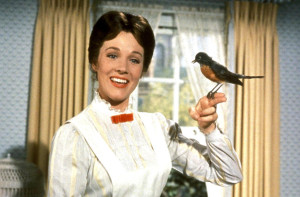
The reason for this admission is that I’ve been struck recently by discussions in our electric market “nerd world” about “governance” of our wholesale market structures in the forms of RTO/ISOs in the East and the Day-Ahead markets popping up in the West. The drive to perfect these reminded me of the term “Governess,” as in the nanny who took care of children in upper-class nurseries back in merry old England. So, to perfect “governance” I thought of Mary Poppins (“practically perfect in every way”) as the tag line of what we are striving for in our industry. I told you I have been overly influenced by British culture…
A tortured past…
I have a long history with the market platform governance issue.
- When I was a young IPP stakeholder, I participated in “reforming” the initial governance proposal of ISO-NE. The equal voting of a sector based vote of stakeholders to inform the ISO-NE Board was a huge improvement on the initial proposal by the utilities of a weighted vote based on asset investment.
- I was the PJM staff chair of a stakeholder committee that made recommendations to the Members’ Committee. The Members’ Committee held the filing rights for most issues under Section 205 of the Federal Power Act (FPA) rather than the PJM Board. I wondered then if that was problematic.
- Also, at PJM I irritated my CEO when I encouraged him to give more attention to the states organization just forming then. I further irritated him when I advocated for the independence of the Market Monitor in the PJM tariff to assuage states.
- As a senior staff member at FERC, I irritated my management about governance reform at the RTOs generally and worried about the governance of the California ISO and its inability at that time to meet the needs of a regional market.
Now I’m part of the Launch Committee of the new governance proposal for the Extended Day Ahead Market (EDAM), the “Regional Organization for Western Energy” (ROWE). I feel like the “dog who caught the car.” We are working on “governance” for this new market. So is SPP in its Markets Plus offering to the West. But then, so is FERC with its laser focus on PJM. It seems we all are working for the Mary Poppins outcome.
But what is the “practically perfect in every way” outcome? What role do stakeholders play? What’s the proper role and relationship between RTO management and the Boards? What is the role for consumer groups and state regulators? Do we sacrifice independent judgement for faster decision making, in light of anticipated large load growth?
Working towards Mary Poppins…
As can be deduced from the full day conference on PJM governance at FERC, there are many views on the proper approach and getting to “practically perfect in every way” may not be possible. I believed the Chairman when she said that if PJM and stakeholders don’t come up with effective changes, the Commission will exercise its authority to do so. Vaya con Dios. My own experience suggests this can be a moving target. What works depends on many factors:
- A good working relationship between RTO management, the Board and trust with stakeholders.
- An active working relationship with state regulators and state policy makers. In the case of many areas in the West, engagement with public power boards.
- Good faith engagement by stakeholders on tariff changes and willingness to compromise. This can be hard to achieve. Doggedness in pursuing certain outcomes can be perceived as good faith to some, but obstinance to one’s own goals to others.
- A faithful federal regulatory process that digs into details in the record and renders timely decisions that are defensible in federal court. Happily, this has generally been the norm in successive Commissions. Concerns about the future exist in the wake of the recent Slaughter decision at the Supreme Court this year.
I won’t opine on where primary filing authority should exist as this is a hot topic among many in the PJM case. However, many things appear to have gone wrong for PJM that relate to some of my points above. My recollection is that after FERC launched an investigation into PJM’s capacity market, the stakeholder discussions revealed a diversity of views but no consensus. While PJM could have filed without stakeholder approval on capacity issues, it chose not to do so in the face of so much opposition. FERC might have played a more active role at this point in encouraging a solution but appeared unwilling to do so. While all these deliberations went on, several auctions necessary for sending signals for capacity additions were missed. At this point, the large load of data centers came quickly into view of the industry – at exactly the wrong time.
Who is at fault in this situation? One can see a breakdown in many areas of trust and decisiveness. But the failures were mostly not structural.
Back to the West…
Given this discussion, it is with a great deal of humility that I engage in the governance discussion of the new ROWE and the Markets Plus platform that SPP is offering parties in the West. We are in a good place right now with most everyone (in both ROWE and SPP efforts) generally working well together. Most are trying hard to see the views of others when they disagree and regularly work toward compromise when possible. These discussions, particularly my experience with my colleagues on the Launch Committee of Pathways that are creating the ROWE, have been among the most edifying experiences of my professional life.
However, I am aware of how fragile this spirit of good faith and bonhomie can be. I recall vividly as an active stakeholder in the first years of PJM how generally collegial the stakeholder meetings were. We debated, we disagreed often, but we generally worked in a spirit that I recall as one of mutual respect. That’s what we are experiencing in the West right now – for the most part. But this atmosphere can change over time, and it probably won’t be because of the structure of the governance of any market.
In closing, I ponder the U.S. Constitution. I believe I am unequaled in my admiration for the founders in what they constructed to guide the world’s greatest Republic. It was a work of genius that was original and has been largely successful for more than two centuries. But this wonderful creation is under threat in a way that it hasn’t been since the Civil War. Is that because of its structure? Or is it because of the people operating inside of it?
Structures are important. People of good faith are more important. Even Mary Poppins can’t fix that.